USG

Container cargo and manufacturing capacity illustrating Guatemala’s role in U.S. supply chain resilience

Guatemala: Adding Depth to America’s Supply Chains

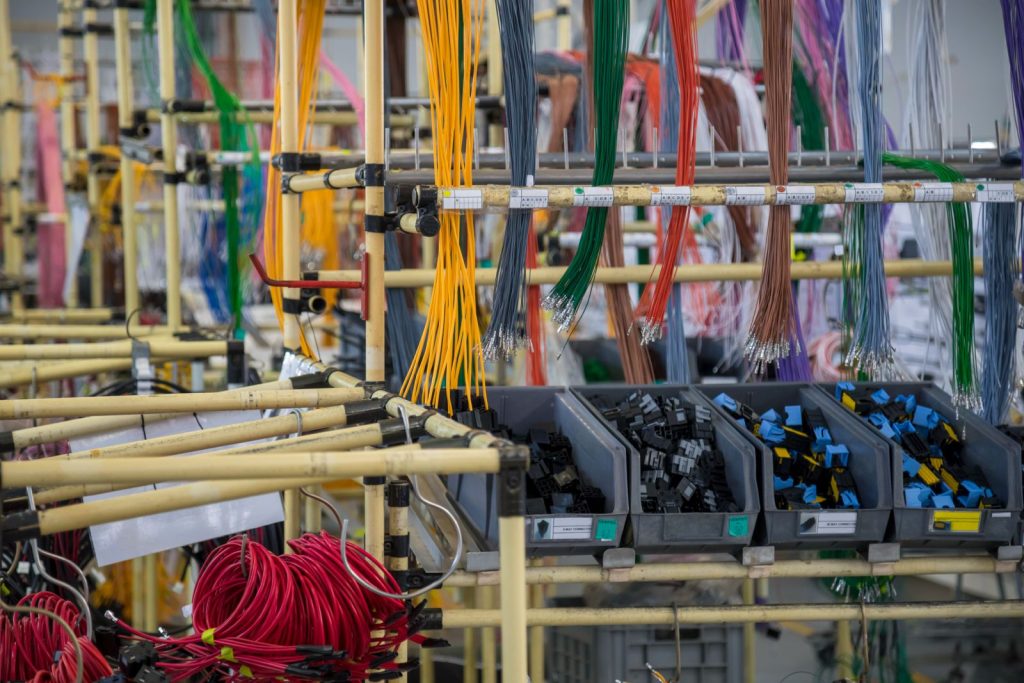
Guatemala: Adding Depth to America’s Supply Chains By Juan Esteban Sánchez, Executive Director, Invest Guatemala In 2025, U.S. imports from China fell by roughly $130 billion, and other suppliers filled about two-thirds of the gap, according to the McKinsey Global Institute. Yet replacing Chinese imports with production concentrated in a few countries does not create resilience. The next stage of supply chains should build depth, meaning more suppliers, more production locations and more logistics routes within a trusted economic space. Guatemala can contribute to that stage, and the reason begins with Mexico. Mexico shows both the reach and the limits of regional integration. The United States imported $534 billion in goods from Mexico in 2025, and 88 percent of imports from Mexico in early 2026 entered as USMCA-compliant. That success has produced concentration, since Mexico supplies roughly 69 percent of U.S. wiring-harness imports. Energy capacity is tightening too, as Mexico’s plan to expand transmission by about 6 percent over five years lags demand growth, and developers expect delays of at least three years for new connections, S&P Global reports. Supplier networks show gaps as well, since 16 anchor auto-parts firms in an IFC pilot identified 35 supply requirements they could not meet locally, including steel stampings imported from Türkiye. These gaps sit in industries where production can be split across borders. Wire harnesses, apparel, packaging and processed foods are modular, labor-intensive and moderately energy-intensive, so they need reliable suppliers near final assembly rather than co-location. Guatemala meets that condition, since it borders Mexico, has ports on both oceans and holds trade agreements with the United States and Mexico. The model already works. Guatemalan apparel incorporates U.S. and regional yarn and fabric under CAFTA-DR’s yarn-forward rule. Harness exports grew from zero to about $40 million in seven years, joining a Central American cluster that ships roughly $1.8 billion a year to the United States. Plastics converters turn U.S. resin into packaging and into tableware, where China still supplies 79 percent of U.S. imports. Trade with Mexico, however, runs mostly one way. In 2023 Guatemala bought $3.4 billion from Mexico and sold it $673 million, so the country is already part of Mexico’s market but not yet of its supply base. Closing that gap depends on trade rules more than geography. USMCA requires 75 percent North American content for autos, so a harness assembled in Guatemala counts as non-originating even if it embeds U.S. copper. The three agreements operate separately, linked only by a narrow textile provision that lets Central American woven apparel use Mexican yarn and fabric up to 100 million square meters a year. Extending cumulation to selected industrial chapters would let Guatemalan sub-assemblies count toward North American content and Mexican inputs toward CAFTA-DR origin. Digital traceability would keep transshipped Asian goods out. The January 2026 Agreement on Reciprocal Trade, with its commitments on supply-chain resilience, export controls and investment security, already provides the legal basis for that safeguard. Integration of this kind requires long-horizon investment, which Guatemala’s macroeconomic foundations support. Public debt is near 27 percent of GDP, reserves stand at $27.1 billion and the sovereign rating is one notch below investment grade, according to the IMF. The gaps are equally measurable. Only $204 million of Guatemala’s $1.88 billion in 2025 FDI went to manufacturing, and its logistics performance ranks 88th in the World Bank’s index, against Mexico’s 66th. Electricity is not cheaper than in Mexico, so the advantage must come from capacity, which a 1,400 MW tender for new firm generation by 2030 aims to secure. Geography adds a second, logistical contribution. In fiscal 2024, Panama Canal transits fell 21 percent as drought forced water-saving measures. A road-and-rail corridor between Puerto Quetzal on the Pacific and Santo Tomás de Castilla on the Atlantic would not replace the canal but would offer a second route when it is constrained. Puerto Quetzal’s expansion is being designed with the U.S. Army Corps of Engineers, and an August 2026 port law created an autonomous national port authority. DFC, EXIM and USTDA participation would build that redundancy to U.S. standards. Reaching scale will depend on three conditions. Guatemala must execute its public-private partnership pipeline, accelerate permitting and customs clearance, and work with its partners toward rules of origin that treat Mexico, Central America and the United States as one production space. Nearshoring has often been measured by distance, but the better measure is depth. Guatemala’s opportunity is not simply proximity to the United States but a place in what it produces, sources and secures within the hemisphere, adding depth behind Mexico and an alternative route beside Panama. The U.S.–Guatemala Business Council invites industry leaders from both countries to deepen this conversation. As Guatemala and the United States advance the priorities of the Agreement on Reciprocal Trade, the Council will continue to convene manufacturers, investors, logistics providers and public-sector counterparts to identify the most concrete opportunities in the shared economic agenda, from supply chain integration to infrastructure and investment. About the author: Juan Esteban Sánchez: Executive Director of Invest Guatemala. An economist holding an MBA and a Master’s degree in Real Estate Project Management and Evaluation, with experience in investment banking and FDI promotion. Sources and further reading McKinsey Global Institute, Geopolitics and the geometry of global trade: 2026 update, March 2026. Office of the U.S. Trade Representative, Guatemala and Mexico country pages, 2025 trade data; Agreement on Reciprocal Trade signing, January 30, 2026. U.S. International Trade Administration, CAFTA-DR textile and apparel provisions and Guatemala energy country guide, March 2026. International Finance Corporation, new phase of Mexico’s Supplier Development Program, August 4, 2025. S&P Global Commodity Insights, Mexico’s multibillion-dollar transmission push falls short, September 2, 2025. International Monetary Fund, Guatemala 2025 Article IV concluding statement, June 23, 2025. World Bank, Logistics Performance Index 2023. Banco de Guatemala, Inversión Extranjera Directa 2025. Panama Canal Authority, FY24 financial results, October 25, 2024. Congressional Research Service, S.–Mexico Trade Relations (IF11175), August 2026.

Guatemala: Adding Depth to America’s Supply Chains Read More »
Guatemala Week 2026: America’s Strategic Partner for Economic Security

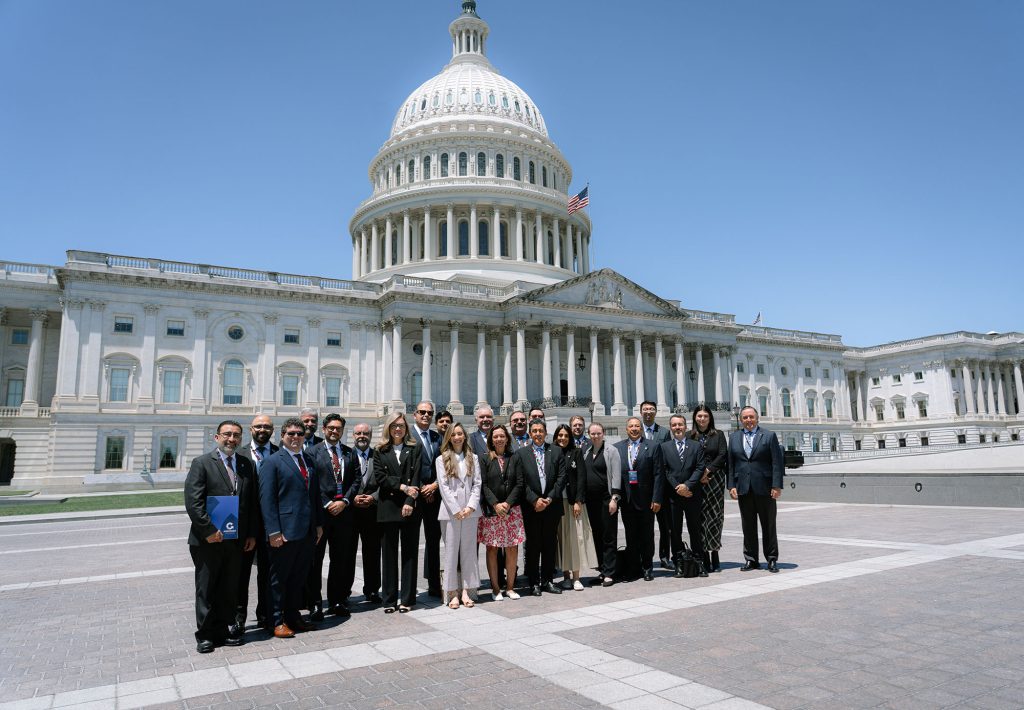
From June 2 to 4, a Guatemalan delegation from the private and public sectors was in Washington with a conviction and a question. The conviction: that Guatemala has the fundamentals to be a strategic partner of the United States at a decisive moment for the Americas. The question: what can Guatemala offer to strengthen the region’s economic security, and how does that collaboration with the United States translate into jobs for Guatemalans, quickly and at scale? Guatemala Week 2026 was the working space for these questions. We did not start from scratch, nor did we present a new plan. We took the items already part of the bilateral economic agenda—port infrastructure, bilateral trade, investment, the rule of law—and interwove them under a single thread: economic and national security and the repositioning of supply chains toward the Western Hemisphere. A once-in-a-lifetime moment The United States is driving a relocation of its critical supply chains, moving them away from geopolitical competitors and closer to reliable partners in the Americas. Decisions on investment, infrastructure, and long-term alliances are being made now, in Washington. Secretary of State Marco Rubio framed it at the outset of his tenure, in January 2025: “Relocating our critical supply chains to the Western Hemisphere would clear a path for our neighbors’ economic growth and safeguard Americans’ own economic security.” — Marco Rubio, Secretary of State, January 2025 A year later, that intent became a bilateral commitment. The Bilateral Trade Agreement of January 2026 states, in its Article 5.1: “The United States and Guatemala intend to strategically align their trade and investment policies to further their shared economic and national security objectives.” — Article 5.1, United States–Guatemala Bilateral Trade Agreement, January 2026 Guatemala does not arrive at this moment as a recipient of assistance, but as a contributor to the economic security of the United States—a role that demands coordination and the fulfillment of concrete commitments on Guatemala’s part. What Guatemala has to offer The Guatemalan proposition rests on verifiable fundamentals. Bilateral trade reached USD 15.19 billion in 2025, with a balance favorable to the United States: U.S. exports totaled USD 10.02 billion, placing Guatemala as that country’s 35th-largest export destination, ahead of larger economies in the region. To this are added macroeconomic fundamentals among the strongest in Latin America: a BB+ (S&P) and Ba1 (Moody’s) rating, both stable and one notch below investment grade; the lowest net public debt in the region (15.7% of GDP); ten consecutive years of current-account surplus; USD 31.4 billion in international reserves; and the most stable currency in Central America. As well, we have preferential access through CAFTA-DR, a predominantly renewable-energy matrix, and we are the only country in Central America with diplomatic recognition of China (Taiwan), which completes the profile of a reliable partner. The physical axis of this proposition is infrastructure. In this context, Puerto Quetzal, geographically located between the Port of Manzanillo in Mexico and the Panama Canal, is emerging as a strategic logistics hub. Through three agreements with the U.S. Army Corps of Engineers—fully financed by Guatemala—the country has committed more than USD 710 million to modernize Puerto Quetzal, implement six priority highway projects, and develop a multimodal rail connection to Escuintla. This initiative also envisions linking Puerto Santo Tomás de Castilla on the Atlantic coast, with the goal of establishing an interoceanic corridor. This represents a large-scale infrastructure program for Guatemala, developed in partnership with the United States and comparable in scope and strategic importance to landmark projects in global trade, such as the Panama Canal. As a result, Guatemala is strengthening its geographic, geopolitical, and strategic position in relation to its largest trading partner, the United States. This brings us to the central question: Guatemala has a unique opportunity to modernize its ports, build critical infrastructure, and attract private capital at scale. More than an investment figure, this represents a pathway to creating formal employment opportunities for Guatemalans. For this reason, the closing event of Guatemala Week 2026, organized in partnership with the IFC and Banco Industrial, was titled “Mobilizing Private Capital at Scale: Delivering Jobs and Impact in Guatemala.” Economic collaboration with the United States is not an end in itself; it is the fastest and most effective path to generating jobs on a large scale. As our platform holds, there is no better ally for the Guatemalan private sector than the United States, and no better long-term partner for the United States than Guatemala’s private sector. Why a permanent presence Guatemala possesses the fundamental conditions to attract strategic investment and projects from the United States. However, without a consistent, coordinated, and compelling presence in Washington, that investment will continue to flow toward countries that have successfully built and sustained such a presence. Investment and policy decisions are not made in the abstract; they are driven by trust, credibility, and proven results developed through long-term relationships. The U.S.–Guatemala Business Council was established to provide that presence: a permanent platform for Guatemala’s private sector in the United States. It is a bipartisan, evidence-based platform anchored in four core principles: strengthening the rule of law to provide certainty for citizens and investors alike; protecting private property rights; fighting corruption as an indispensable condition for investment; and developing strategic infrastructure as a catalyst for economic growth. Three days, one interrelated agenda Guatemala Week consisted of fourteen events held over three days, each connected by a common thread and aligned around a shared strategic agenda. Bipartisan briefings with Congressional leadership, working meetings with federal agencies implementing programs in Guatemala, roundtable discussions with U.S. and multinational companies, the presentation of the structuring of landmark lending facilities for small businesses in partnership with Banco Industrial and the IFC, discussions on regional priorities with leading think tanks, and presentations on priority sectors for investment attraction by Guatemala’s Ministry of Economy and private investment promotion agencies such as Invest Guatemala. The strength of Guatemala Week lay not only in its agenda, but also in who took part in it. On the Guatemalan side, the

Guatemala Week 2026: America’s Strategic Partner for Economic Security Read More »

Guatemala Week 2026: el socio estratégico de EE.UU. para la seguridad económica

Del 2 al 4 de junio, una delegación guatemalteca del sector privado y público estuvo en Washington con una convicción y una pregunta. La convicción: que Guatemala tiene los fundamentos para ser un socio estratégico de Estados Unidos en un momento decisivo para las Américas. La pregunta: ¿qué puede ofrecer Guatemala para fortalecer la seguridad económica de la región, y cómo esa colaboración con Estados Unidos se traduce en empleos para los guatemaltecos, con rapidez y a escala? Guatemala Week 2026 fue el espacio de trabajo para dar respuesta a estas preguntas. No partimos de cero ni presentamos un plan nuevo. Tomamos los puntos que ya integran la agenda económica bilateral —infraestructura portuaria, comercio, inversión, estado de derecho— y los interrelacionamos bajo un mismo hilo conductor: la seguridad económica y nacional, y el reposicionamiento de las cadenas de suministro hacia el Hemisferio Occidental. Un momento que no se repite Estados Unidos está impulsando una reubicación de sus cadenas de suministro críticas, alejándolas de competidores geopolíticos y acercándolas a socios confiables en la región americana. Las decisiones sobre inversión, infraestructura y alianzas de largo plazo se están tomando ahora, en Washington. El Secretario de Estado, Marco Rubio, lo planteó desde el inicio de su mandato en enero de 2025: “La reubicación de nuestras cadenas de suministro estratégicas en el Hemisferio Occidental impulsaría el crecimiento económico de nuestros países vecinos y reforzaría la seguridad económica de los Estados Unidos.” — Marco Rubio, Secretario de Estado, enero de 2025 Un año después, esa intención se convirtió en un compromiso bilateral. El Acuerdo Comercial Bilateral de enero de 2026 establece, en su artículo 5.1: “Los Estados Unidos y Guatemala tienen la intención de alinear estratégicamente sus políticas de comercio e inversión para avanzar en sus objetivos compartidos de seguridad económica y seguridad nacional.” — Artículo 5.1, Acuerdo Comercial Bilateral Estados Unidos–Guatemala, enero de 2026 Guatemala no llega a este momento como receptor de asistencia, sino como contribuyente a la seguridad económica de los Estados Unidos. Lo cual demanda articulación y cumplimiento de compromisos concretos por parte de Guatemala. Qué ofrece Guatemala La propuesta guatemalteca descansa en fundamentos verificables. El comercio bilateral alcanzó USD 15.19 mil millones en 2025, con una balanza favorable para los Estados Unidos: las exportaciones estadounidenses sumaron USD 10.02 mil millones, ubicando a Guatemala como el 35.º destino de exportación de ese país, por delante de economías más grandes de la región. A ello se suman fundamentos macroeconómicos entre los más sólidos de América Latina: calificación BB+ (S&P) y Ba1 (Moody’s), ambas estables y a un escalón del grado de inversión; la deuda pública neta más baja de la región (15.7% del PIB); diez años consecutivos de superávit en cuenta corriente; USD 31.4 mil millones en reservas internacionales; y la moneda más estable de Centroamérica. Asimismo, contamos con acceso preferencial vía CAFTA-DR, una matriz energética predominantemente renovable y somos el único país en Centroamérica con reconocimiento diplomático de China (Taiwán), lo que completa un perfil de socio confiable. El eje físico de esta apuesta es la infraestructura, donde Puerto Quetzal, situado geográficamente entre el Puerto de Manzanillo, en México, y el Canal de Panamá, se vuelve un punto estratégico. A través de tres acuerdos con el U.S. Army Corps of Engineers —enteramente financiados por Guatemala— el país ha comprometido más de USD 710 millones para modernizar Puerto Quetzal, ejecutar seis proyectos viales prioritarios y una conexión ferroviaria multimodal hacia Escuintla, incluyendo Puerto Santo Tomás de Castilla en el Atlántico, con miras a un corredor interoceánico. Este es un programa de infraestructura de gran escala para Guatemala, ejecutado en conjunto con los Estados Unidos, y comparable a proyectos de gran envergadura en el comercio global, como el Canal de Panamá. Estos temas sitúan a Guatemala en una posición geográfica, geopolítica y estratégica frente a su principal socio comercial, los Estados Unidos. Aquí se conecta la pregunta central: el país tiene la oportunidad de modernizar puertos, construir carreteras y atraer capital privado a escala, lo cual, antes que una cifra, es una fuente de empleo formal para los guatemaltecos. Por eso, el evento de cierre del Guatemala Week 2026, convocado junto al IFC y al Banco Industrial, fue titulado “Movilización de capital privado a gran escala: generando empleo e impacto en Guatemala”. La colaboración económica con Estados Unidos no es un fin en sí mismo: es el camino más rápido para generar empleo de forma rápida y a gran escala. Como sostiene nuestra plataforma, no hay mejor aliado para el sector privado guatemalteco que los Estados Unidos, ni mejor socio a largo plazo para los Estados Unidos que el sector privado de Guatemala. Por qué una presencia permanente Guatemala cuenta con los factores para atraer proyectos e inversión estratégica de Estados Unidos. Pero sin una presencia consistente, articulada y atractiva en Washington, esa inversión fluye hacia los países que sí la han construido. Las decisiones de inversión y de política no se toman en abstracto: se toman en torno a la confianza y a los resultados demostrados en relaciones sostenidas a lo largo del tiempo. El U.S.–Guatemala Business Council existe para constituir esa presencia: la presencia permanente del sector privado en los Estados Unidos. Una plataforma bipartidista y basada en evidencia, anclada en cuatro principios de trabajo: el fortalecimiento del estado de derecho para dar certeza a las personas y las inversiones, la protección de la propiedad privada, el combate a la corrupción como condición indispensable para invertir, y el desarrollo de infraestructura estratégica como catalizador del crecimiento. Tres días, una agenda interrelacionada Guatemala Week consistió en catorce actividades en tres días, cada una conectada a las demás por un mismo hilo conductor. Briefings bipartidistas con el liderazgo del Congreso, reuniones de trabajo con agencias federales que tienen programas en Guatemala, mesas redondas con empresas multinacionales y estadounidenses, presentación de la estructuración de créditos históricos dedicados a pequeñas empresas junto al Banco Industrial y al IFC, discusión de temas de interés regional con tanques de pensamiento, y presentaciones sobre industrias prioritarias para

Guatemala Week 2026: el socio estratégico de EE.UU. para la seguridad económica Read More »